Short answer: Black streaks are usually an algae called Gloeocapsa magma. They look bad but rarely harm the shingles. Moss is different: it holds water, lifts shingle edges and shortens the life of the roof. Both can be treated with a gentle cleaner and no pressure washing. Zinc or copper strips and algae-resistant shingles help keep them from coming back.
Drive around West Caldwell and you'll notice plenty of roofs with dark streaks running down the slopes, and some with green cushions of moss on the shaded side. It's common in towns with lots of mature trees. Both can be dealt with.
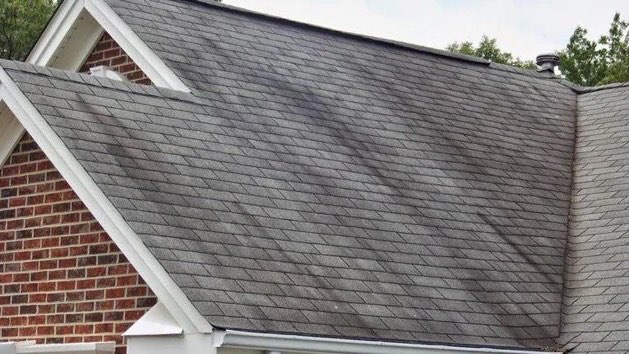
What the black streaks are
The streaks are a type of algae that feeds on the limestone filler found in many asphalt shingles. It spreads by wind and grows best on slopes that stay damp, usually north-facing ones or anything under trees. As it grows it develops a dark protective coating, which is the black you see.
Algae doesn't eat through shingles. Still, dark streaks absorb more heat, and many people simply don't like how they look. Streaky roofs can also make a house look older and more worn than it is when it's time to sell.
Why moss is a bigger problem
Moss is a plant with a shallow root system that grips the shingle surface. It works like a sponge, holding water against the roof for days after rain. Over time it:
- Lifts the edges of shingles, letting wind-driven rain underneath
- Loosens the protective granules
- Keeps the deck damp, which can lead to rot
- Clogs gutters when clumps break off
A little moss along one shaded edge isn't an emergency. Thick moss across a whole slope is worth dealing with soon.
How to clean a roof safely
The one thing never to do is pressure wash shingles. It strips granules, voids warranties and can force water under the shingles.
Instead:
- Use a cleaner made for roofs, or a diluted mix the shingle manufacturer approves, applied with a low-pressure sprayer.
- Wet nearby plants first and rinse them after, because many cleaners harm landscaping.
- Let the cleaner work. Streaks fade over days or weeks as rain rinses them away.
- For moss, let the treatment kill it, then brush loose clumps off gently from the top down. Don't scrape.
This is ladder work on a sloped surface, often slippery. If you aren't comfortable on a roof, hire someone who is.
Keeping it from coming back
Zinc or copper strips. A strip installed just below the ridge releases a small amount of metal each time it rains, which washes down the roof and discourages growth. It works best on the area right below the strip.
More sun and air. Trimming branches that hang over the roof lets it dry faster after rain. Fewer leaves on the roof also means less organic matter for moss to grow in.
Clean gutters. Overflowing gutters keep the lower edge of the roof wet. Guards help on heavily treed lots. See our gutter installation page.
Algae-resistant shingles. If you're replacing the roof anyway, most major brands offer shingles with copper-coated granules mixed in. They're designed to resist streaking for many years and are worth it on shaded lots.
Repair or clean?
If the shingles under the moss are still flat, sound and holding their granules, cleaning is enough. If moss has lifted edges, the shingles are brittle, or the roof is already near the end of its life, cleaning only buys a little time. In that case it's worth comparing the cost of a cleanup with a new roof.
Not sure which applies to yours? Book a free inspection and we'll tell you what we see, with photos.
Need help with this in West Caldwell?
We'll take a look and give you a free written quote. Learn more about roof repair in West Caldwell.